
Public January 6 profile · ready to claim
Cindy Lou Young
Pardoned January 6 defendant and pro se filer in post-judgment and related plaque litigation
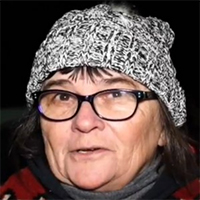 Documented editorial-use image
## Case overview Cindy Lou Young of Bristol, New Hampshire, was prosecuted in *United States v. Young*, No. `1:23-cr-00241-GMH`, in the U.S. District Court for the District of Columbia. The criminal case involved four misdemeanor counts arising from January 6, 2021. Government descriptions of her movements and intent remain attributed allegations unless reflected in an admitted fact or judicial finding. A jury found Young guilty on all four counts on August 9, 2024. Magistrate Judge G. Michael Harvey sentenced her on November 21, 2024, and judgment was entered on December 11, 2024. The available court opinions identify a four-month prison term; the native signed judgment remains necessary to verify every financial and supervision term. Young received a full January 6 pardon in January 2025. The pardon, verdict, and sentence are legal events and are not presented as judgments about her moral character. ## Selective-prosecution litigation Before trial, Young argued that January 6 defendants were selectively prosecuted when compared with participants in other political protests. On June 17, 2024, Judge Harvey denied that motion, holding that the proposed comparator groups were not similarly situated under the governing standard. That ruling records the court’s legal analysis; Young’s disagreement with the prosecution remains her attributed advocacy position. ## Sealed-filings dispute Two government submissions, ECF Nos. 63 and 64, were filed under seal in July 2024 concerning a proposed defense exhibit and witness. Young sought public access. On August 29, 2025, Judge Harvey entered ECF No. 158 and required renewed sealed briefing under the D.C. Circuit’s public-access framework. The order did not itself unseal either filing, decide the underlying evidentiary dispute, vacate the judgment, or grant a new trial. The public docket later reflected additional pro se activity concerning unsealing. A July 8, 2026 docket entry records a request for leave to file with an attached motion to unseal. Because the native papers and any later ruling have not been captured, the archive does not infer their full arguments or outcome. ## Dunn v. Austin plaque litigation Young and Brian Mock sought to intervene in *Dunn v. Austin*, No. `1:25-cv-01844-DLF`, litigation concerning a congressionally directed plaque for officers who responded on January 6. On March 30, 2026, Judge Dabney L. Friedrich denied both intervention motions for lack of standing and declined permissive intervention. That ruling addressed participation in the plaque case; it did not determine the truth of Young’s broader firsthand claims about January 6, prosecution, detention, public history, or government conduct. ## Verified timeline - **June 21, 2023:** The criminal complaint was filed, according to the court’s June 2024 opinion. - **June 17, 2024:** The court denied Young’s selective-prosecution motion. - **August 9, 2024:** A jury found Young guilty on four misdemeanor counts. - **November 21, 2024:** Judge Harvey imposed sentence. - **December 11, 2024:** Judgment was entered. - **January 2025:** Young received a full January 6 pardon. - **August 29, 2025:** The court ordered renewed briefing on the continued sealing of ECF Nos. 63 and 64. - **March 30, 2026:** The court denied Young’s and Brian Mock’s motions to intervene in *Dunn v. Austin*. - **July 8, 2026:** Public docket metadata recorded Young’s request for leave to file an attached motion to unseal. ## Factual FAQ ### Did Cindy Young plead guilty? No. The available court record states that a jury found her guilty on four misdemeanor counts. ### What sentence was imposed? The court record establishes sentencing on November 21, 2024, and available opinions identify a four-month prison term. Complete financial and supervision terms should be taken from the native signed judgment when captured. ### Was she pardoned? Yes. She received a full January 6 pardon in January 2025. A pardon is a clemency action; it is not described here as a jury acquittal or appellate merits ruling. ### Were the sealed filings unsealed by the August 29, 2025 order? No. The order required additional briefing. It did not itself release ECF Nos. 63 or 64. ### Did the plaque-case ruling decide Young’s January 6 claims? No. The March 30, 2026 opinion resolved intervention and standing questions. It did not adjudicate her broader factual or editorial claims. ## Source and archive connections Review the linked court records and timeline entries on this profile, including the August 29, 2025 unsealing-briefing order and the March 30, 2026 *Dunn v. Austin* opinion. Use Case Nexus to follow related people, filings, and events. Submit native filings, authenticated interviews, photographs with provenance and lawful reuse information, or corrections through the archive evidence-submission process. ## Editorial boundary The site may analyze Young’s prosecution as part of alleged or documented Biden-era DOJ weaponization. That editorial position remains separate from the underlying court record, attributed government allegations, Young’s advocacy, jury findings, clemency, and unresolved disputes.
The case file
On the record
- Case number
- 1:23-cr-00241
- Court
- U.S. District Court for the District of Columbia
- Judge
- G. Michael Harvey
- Disposition
- Jury convictions on four misdemeanor counts; sentenced November 21, 2024; full January 6 pardon in January 2025. Post-judgment unsealing activity remained ongoing in the public docket.
- Sentenced
- November 21, 2024
Charges
- Entering and remaining in a restricted building or grounds
- Disorderly and disruptive conduct in a restricted building or grounds
- Violent entry and disorderly conduct in a Capitol building
- Parading, demonstrating, or picketing in a Capitol building
Sentence
Four months’ imprisonment, according to the March 30, 2026 federal court opinion; full January 20, 2025 pardon. Native judgment review remains pending for complete financial and supervision terms.
Press & news
- https://www.cbsnews.com/boston/news/new-hampshire-woman-charged-in-jan-6-capitol-riots →
- https://docs.justia.com/cases/federal/district-courts/district-of-columbia/dcdce/1%3A2025cv01844/281540/45 →
- https://www.nhpr.org/nh-news/2023-06-23/bristol-nh-woman-arrested-for-allegedly-participating-in-jan-6-capitol-riot →
- https://www.pacermonitor.com/public/case/58523681/DUNN_et_al_v_AUSTIN_et_al →
- https://www.courtlistener.com/docket/67632896/united-states-v-young/ →
- https://www.justice.gov/usao-dc/defendants/young-cindy →
Public knowledge · no paywall
This profile is free for anyone to read.
Sign-in is only required to claim ownership, manage a claimed profile, or suggest a factual correction. Reading and sharing the public record never requires an account.
A free account is required for either action so submissions remain tied to a real person and can be reviewed.
Tap how this hits you — no signup, everyone sees the count
Connection to United States v. Nichols
Cindy Lou Young appears in the record of United States v. Nichols through 4 shared documents on file below. The full case — timeline, people, documents — is public and free.
Walk the whole case →Evidence on file
4 documents on file
Court4 documents
Court orders, rulings, transcripts, and docket entries.
docket · Jul 8, 2026
Dunn v. Austin — June–July 2026 Appellate and Unsealing Docket Update
Public docket metadata records a D.C. Circuit order dismissing a petition for writ of mandamus in No. 26-5076 and a later Cindy Lou Young request for leave to file with an attached motion to unseal. The native filings remain pending, so this record reports docket metadata only and does not infer the papers’ uncaptured arguments.
ruling · Mar 30, 2026
Dunn v. Austin — Opinion Denying Brian Mock and Cindy Young Intervention
An 11-page March 30, 2026 memorandum opinion in Dunn v. Austin denied Brian Mock’s and Cindy Lou Young’s motions to intervene in litigation concerning the congressionally directed January 6 law-enforcement plaque. The ruling addressed standing and permissive intervention; it did not decide the truth or falsity of their broader firsthand claims about January 6, detention, stigma, public history, or government conduct.
ruling · Mar 30, 2026
Dunn v. Austin opinion denying Brian Mock and Cindy Young intervention
Judge Dabney L. Friedrich denied Brian Mock’s and Cindy Lou Young’s motions to intervene in litigation over a January 6 officer plaque, holding that they lacked standing and declining permissive intervention under Rule 24.
order · Aug 29, 2025
United States v. Cindy Young — Order requiring renewed briefing on sealed filings
Magistrate Judge G. Michael Harvey ordered renewed sealed briefing concerning whether ECF Nos. 63 and 64 should remain sealed. The order recounts the conviction, sentencing, judgment, and later pardon but does not decide the ultimate unsealing question.