The data

Going it alone is a losing bet. The numbers say so.

Eight charts. Every number cited to a federal source or peer-reviewed study. Read it and decide for yourself whether a written plan, a documented chronology, and an organized evidence file are worth the price of a cup of coffee or the price of a nice dinner.

96%

of federal cases go against pro se plaintiffs

38%

of §1983 dismissals are paperwork failures, not merit losses

$12.5B

reported lost to fraud by Americans in 2024

3%

of §1983 civil rights cases ever reach trial
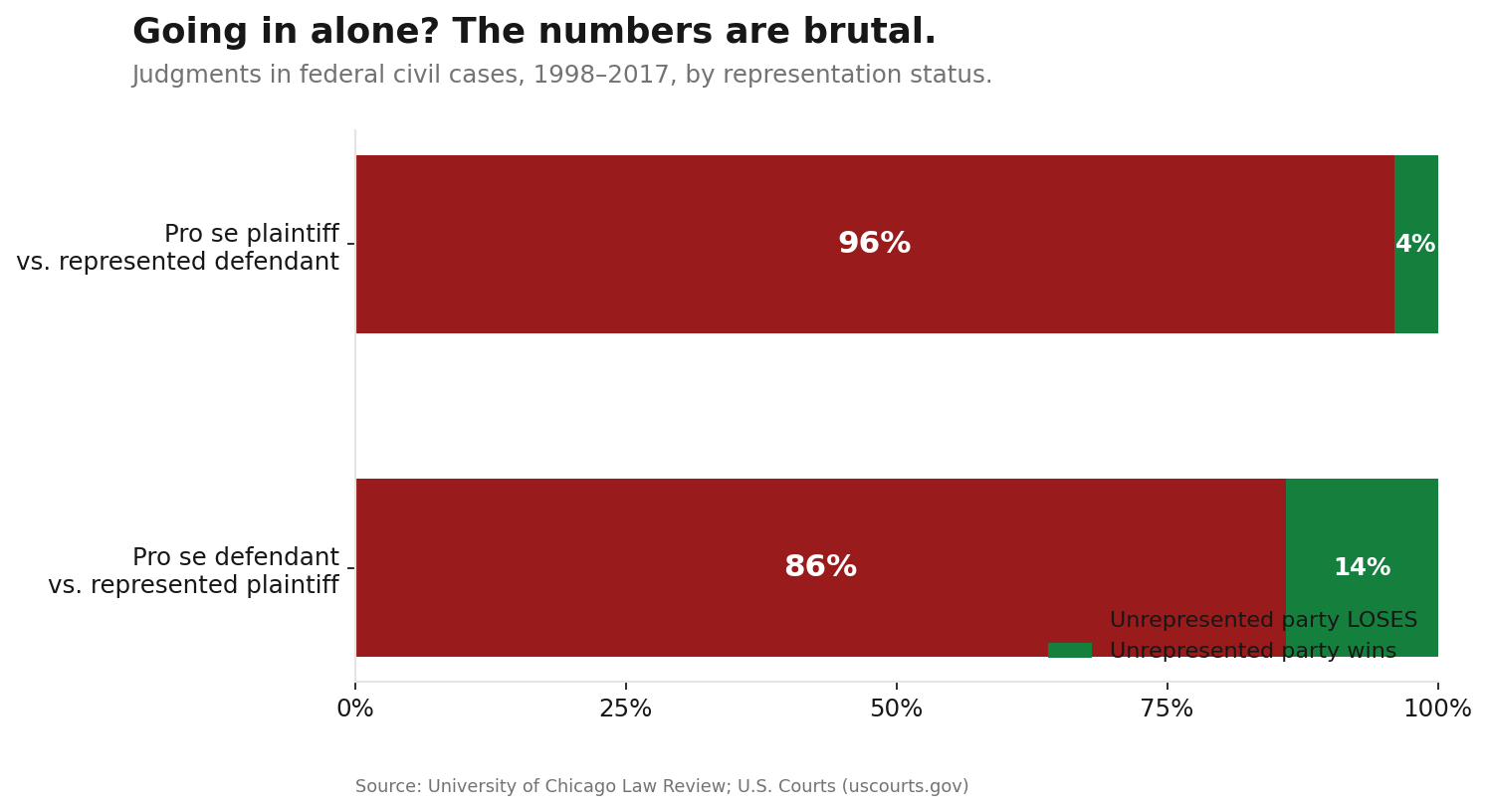
Federal civil case outcomes by representation status, 1998–2017. Pro se plaintiffs lose 96% of the time.
Representation is the single biggest predictor of civil case outcomes. When a self-represented plaintiff faces a represented defendant, 96% of federal judgments go the other way.

Source: University of Chicago Law Review; U.S. Courts (uscourts.gov).
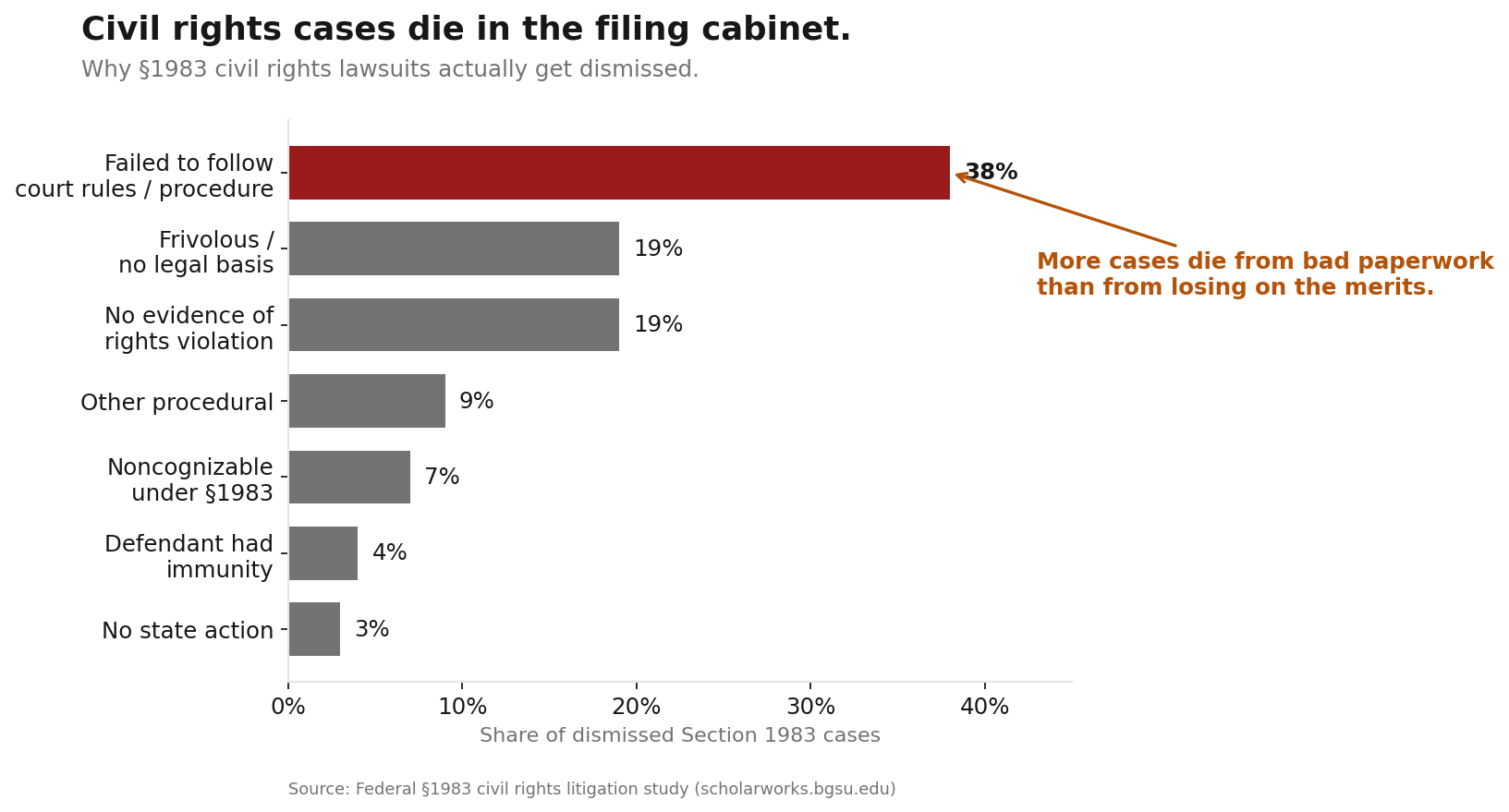
Reasons federal Section 1983 civil rights cases get dismissed. 38% fail for procedural non-compliance.
The largest single reason §1983 civil rights cases get dismissed is failure to comply with court rules — not losing on the merits. That is a paperwork problem. Paperwork is fixable.

Source: Federal §1983 civil rights litigation study, Bowling Green State University.
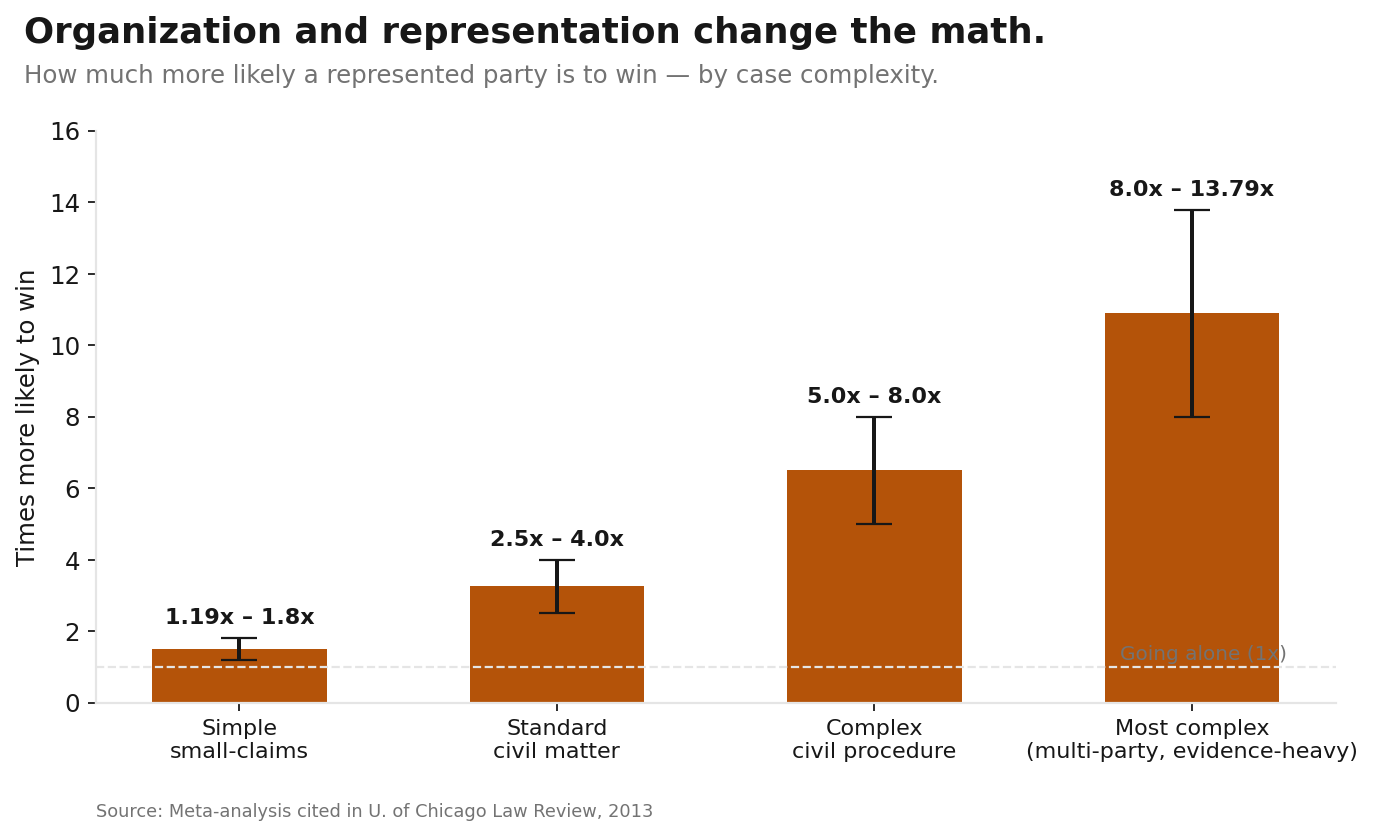
A 2010 meta-study finding that representation multiplies win odds between 1.19x and 13.79x depending on case complexity.
A meta-analysis of outcome studies cited by the University of Chicago Law Review found that help — organization, representation, or both — multiplies the odds of winning between roughly 1.2x and nearly 14x. The more complex the case, the bigger the multiplier.

Source: Meta-analysis cited in University of Chicago Law Review, 2013.
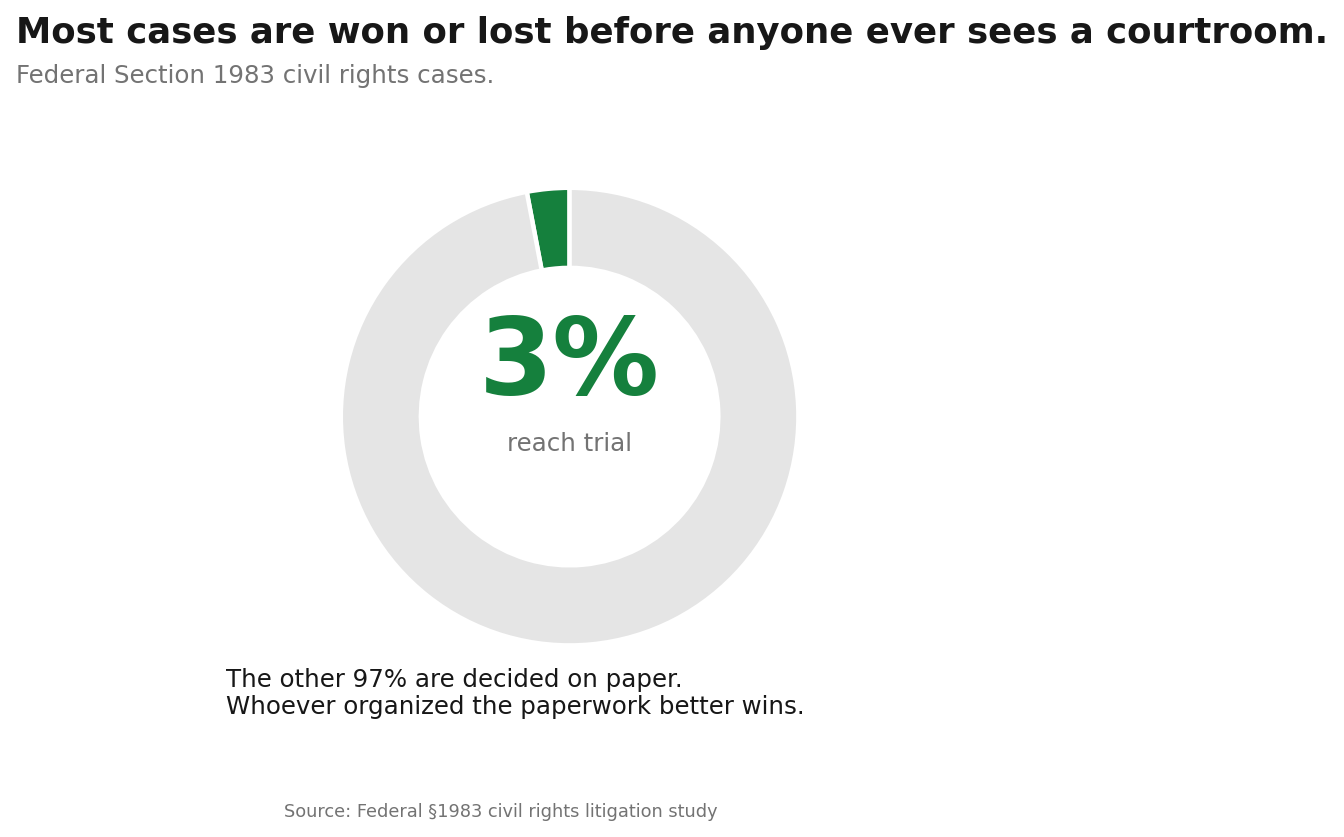
Only 3% of federal Section 1983 civil rights cases reach trial.
Only 3% of federal §1983 civil rights cases ever reach trial. The other 97% are settled, dismissed, or decided on summary judgment — which is to say, decided on paper. Whoever organized the paper better wins.

Source: Federal §1983 civil rights litigation study.
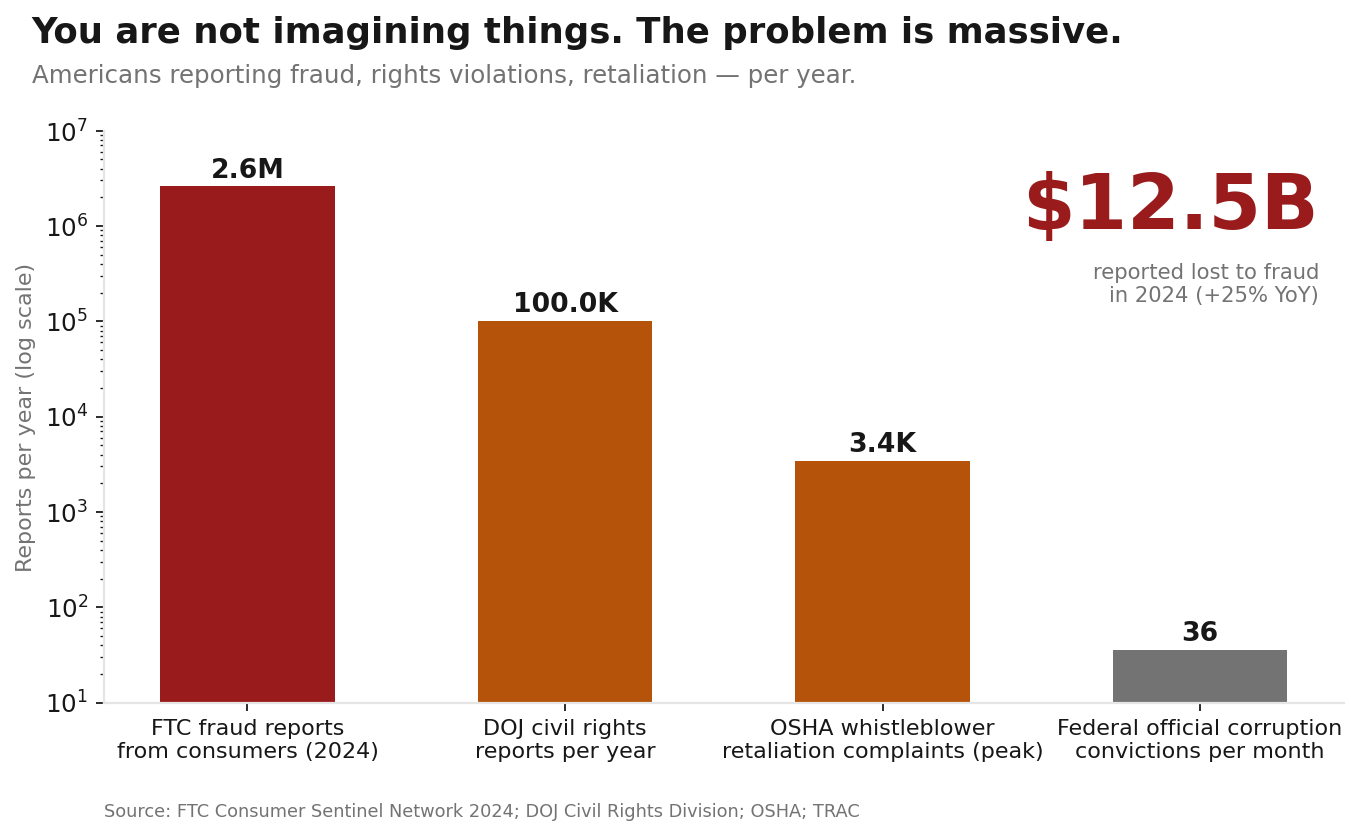
Scale of fraud, civil rights complaints, and retaliation complaints in the United States per year.
Americans reported losing $12.5 billion to fraud in 2024 alone — a 25% jump over 2023. The DOJ Civil Rights Division receives over 100,000 reports per year. You are not imagining things.

Source: FTC Consumer Sentinel Network 2024; DOJ Civil Rights Division; OSHA Whistleblower Protection Program; TRAC Reports.
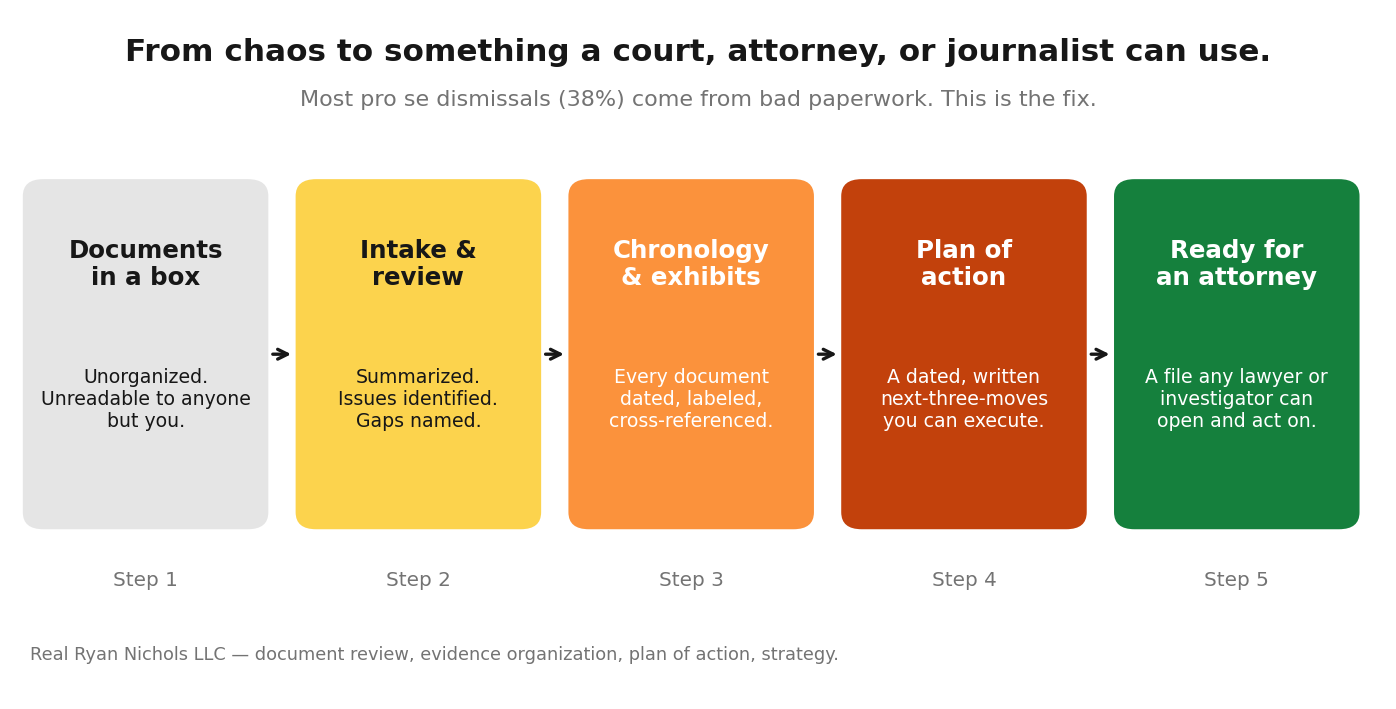
Five-step client journey: documents in a box → intake → chronology → plan of action → ready for an attorney.
Here is what actually happens when you bring us your situation. We are not a law firm and Ryan is not an attorney — we are the step in front of one. We turn your pile of documents into something any attorney, investigator, or journalist can open and act on.

Source: Real Ryan Nichols LLC service process.
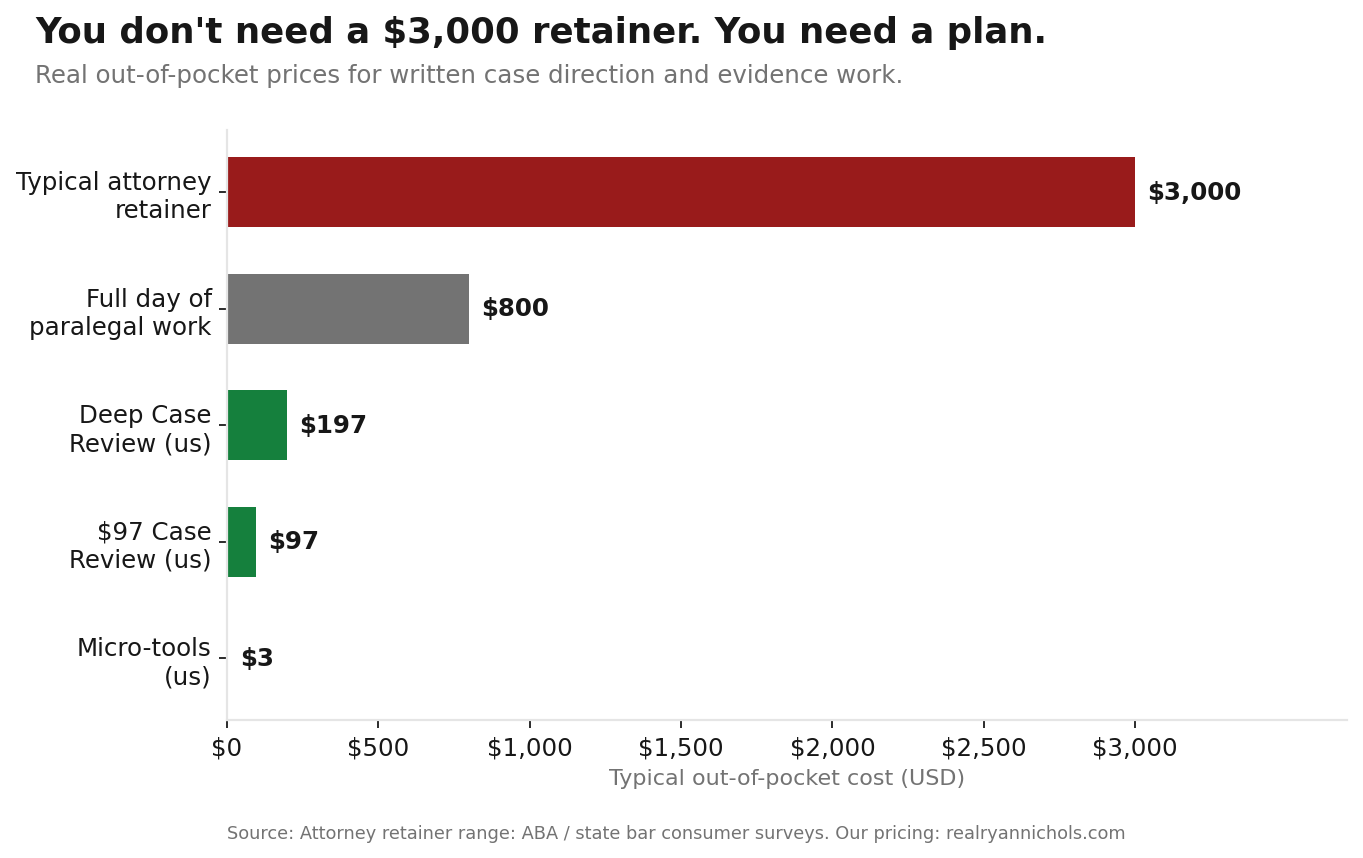
Cost comparison: $3,000 typical attorney retainer versus our $3-$497 offer range.
We price for people who would otherwise give up. A typical civil attorney retainer runs about $3,000 before any real work begins. Our case direction work starts at $3 and tops out at a few hundred dollars — enough to move your situation forward without waiting until you have saved up retainer money.

Source: Attorney retainer range: ABA & state bar consumer surveys. Our pricing: realryannichols.com/services.
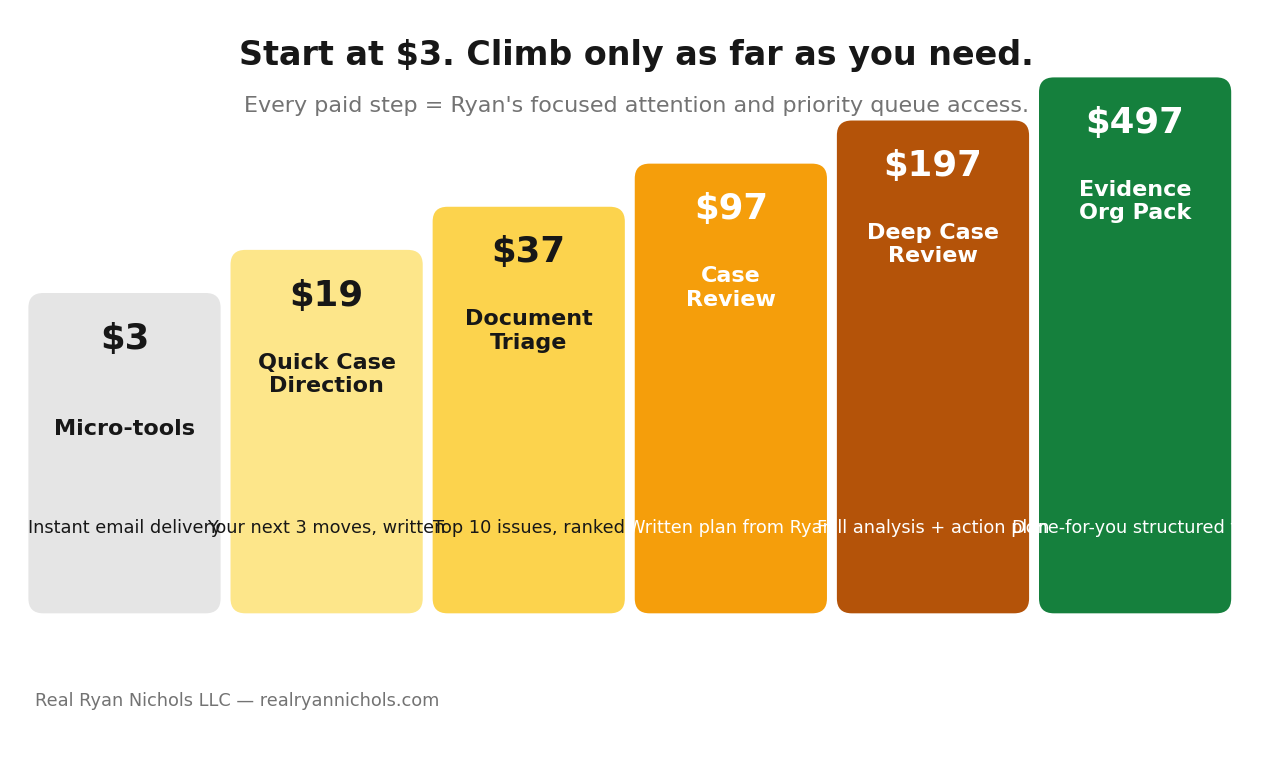
Offer ladder: $3 micro-tools → $19 quick case direction → $37 document triage → $97 case review → $197 deep case review → $497 evidence organization pack.
Climb only as far as you need to. Every paid rung moves you into the priority queue and gets Ryan's focused, named attention on your matter.

Source: Real Ryan Nichols LLC service catalog.

The cheapest move is the next one.

You do not have to start at $497. Start at $3. Start at $19. Start with a written next-three-moves and see if what you get back is worth coming back for. That is the whole pitch.

About the numbers: every chart cites public federal or peer-reviewed sources. The data does not promise an outcome in your specific matter — no one can — but it describes the playing field honestly.

What we are: an investigative and consulting business. Document review, evidence organization, plan of action, and strategy.

What we are not: a law firm. Ryan is not an attorney. We do not give legal advice and do not represent clients in court.